

There are places that ask something of you the moment you arrive. Rocamadour is one of them.
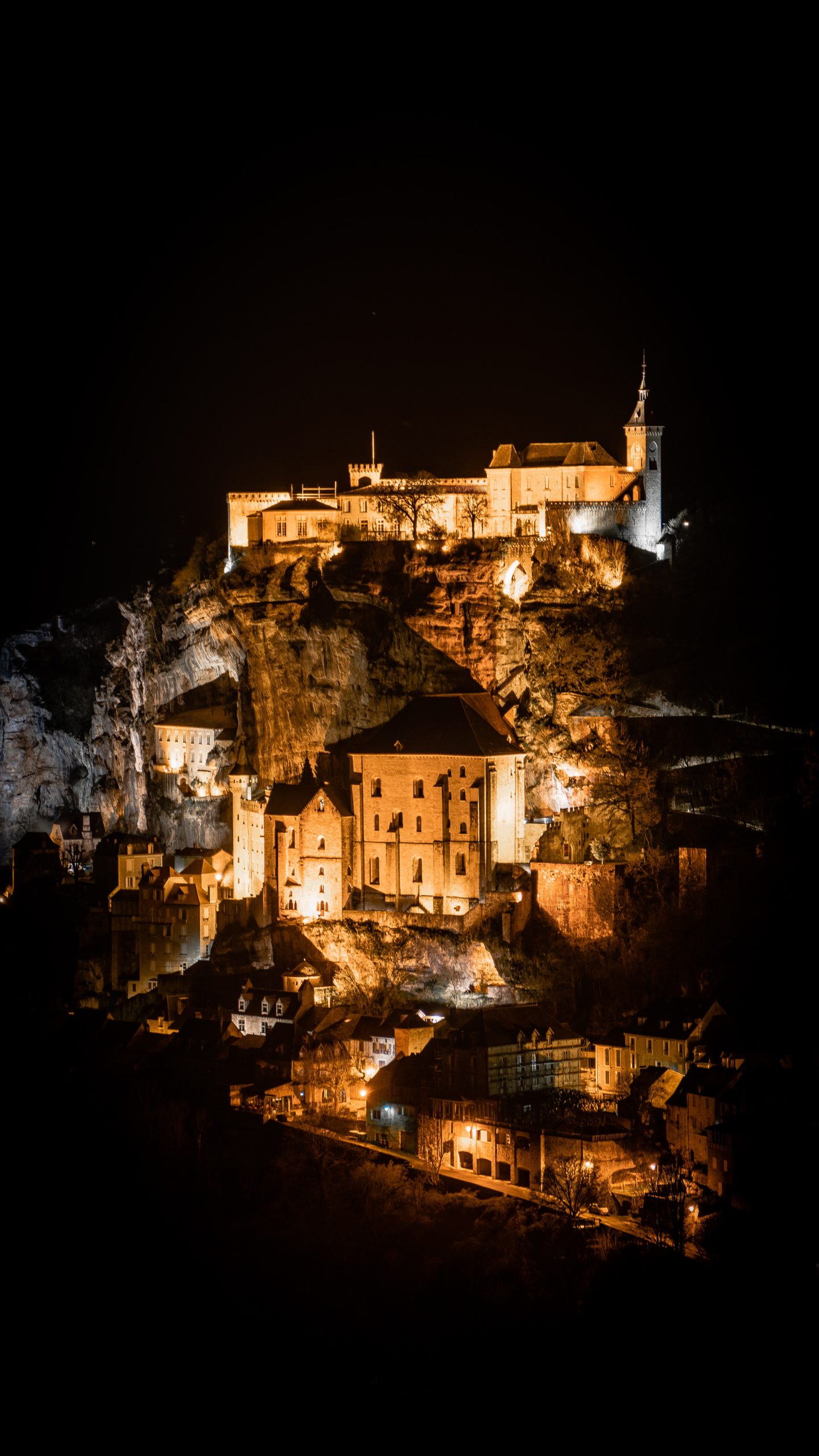
Clinging improbably to a sheer limestone cliff, Rocamadour does not unfold gently. You see it all at once — stacked stone buildings rising vertically, a sanctuary pressed into rock, and above it all, the open sky. It feels less like a village and more like a threshold.
People have been coming here for over a thousand years. Not as tourists, but as pilgrims. Drawn by devotion, desperation, gratitude, and longing — often without fully understanding why.
At the heart of Rocamadour sits a small, dark figure: the Black Madonna. Quiet. Worn. Unassuming. And yet, she has drawn kings, queens, sailors, mothers, and seekers across centuries.
The Pilgrimage of Descent
One of the first things you notice in Rocamadour is that the journey is downward before it is upward.
Pilgrims traditionally enter the sanctuary by descending the Grand Staircase, sometimes on their knees. This physical act mirrors an inner movement — humility, surrender, letting go of certainty.
You don’t arrive here standing tall.
You arrive softened.
The sanctuary itself is embedded in the cliff, as if the mountain opened its body to hold something sacred. This is not accidental. Sacred sites throughout history are often built where earth and spirit feel closest — caves, springs, cliffs, and thresholds between worlds.
Rocamadour is one of those places.
The Black Madonna of Rocamadour
The Black Madonna of Rocamadour is small — carved from dark wood, seated, holding a child on her knee. Her features are simple. Her expression neutral, almost unreadable.
And yet, people feel her.
Black Madonnas appear across Europe, often in ancient pilgrimage sites. Their darkness has been interpreted in many ways — age, smoke from candles, symbolic mystery — but beneath these explanations lies something older.
These figures carry echoes of pre-Christian goddess traditions: earth mothers, fertility figures, protectors of life, death, and rebirth. When Christianity spread, these ancient feminine images were not erased — they were absorbed, renamed, and re-clothed as Mary.
But the memory remained.
The Black Madonna does not offer sweetness or comfort alone. She offers presence. She holds both light and shadow. Life and loss. Creation and grief.
This is why people come to her with what they cannot say out loud.

The Woman and the Child: An Ancient Memory
Throughout the Lot — and especially around churches and sanctuaries — you will often see sculptures of a woman holding a child. Sometimes pale, sometimes dark, sometimes crowned, sometimes simple.
This image predates Christianity by thousands of years.
It speaks to:
- nourishment and protection
- the cycle of life
- the continuity of lineage
- the wisdom of the body
- the bond between human and earth
In Rocamadour, this symbolism feels amplified. The Madonna and Child are not elevated above you — they sit at eye level, human in scale, accessible. The sacred is not distant here. It is intimate.
For many women especially, encountering the Black Madonna can awaken something deeply personal: grief held in the body, questions of identity, motherhood in all its forms, or the need to be held rather than to hold.
Miracles, Sailors, and the Sea
Though Rocamadour is far from the ocean, it has long been associated with sailors. Ex-votos — offerings of gratitude — still hang in the chapels: ship models, plaques, and prayers for safe passage.
This points to an important truth: Rocamadour is not only about physical location. It is about navigation — through danger, uncertainty, and the unknown.
People did not come here when life was easy.
They came when something was at stake.
And many still do.
Why Rocamadour Still Matters
In a modern world that values explanation over experience, Rocamadour remains stubbornly unexplainable.
You don’t need to believe anything specific to feel its impact. You only need to arrive open enough to notice what shifts inside you.
People often describe:
- an unexpected emotional release
- a sense of grounding
- clarity after confusion
- a deep quiet
These are not dramatic miracles. They are subtle realignments.
And they linger.
Rocamadour and Retreat Work
This is why places like Rocamadour matter so deeply in retreat work.
Retreats are not about adding more — more insight, more effort, more understanding. They are about remembering. About creating space where something essential can surface without force.
Rocamadour teaches this through landscape alone:
- descent before ascent
- humility before insight
- silence before clarity
It reminds us that transformation does not begin with answers, but with presence.
An Invitation
You do not come to Rocamadour to be impressed.
You come to be met.
Met by stone and silence.
By shadow and tenderness.
By an ancient feminine presence that asks nothing of you — except honesty.
This is one of the sacred landscapes that informs the retreats I hold here in the Lot. Not as an idea, but as a lived experience. A reminder that healing does not always come through effort, but through allowing yourself to arrive exactly as you are.
And sometimes, to kneel — not in submission, but in remembrance.





Leave a Reply
You must be logged in to post a comment.